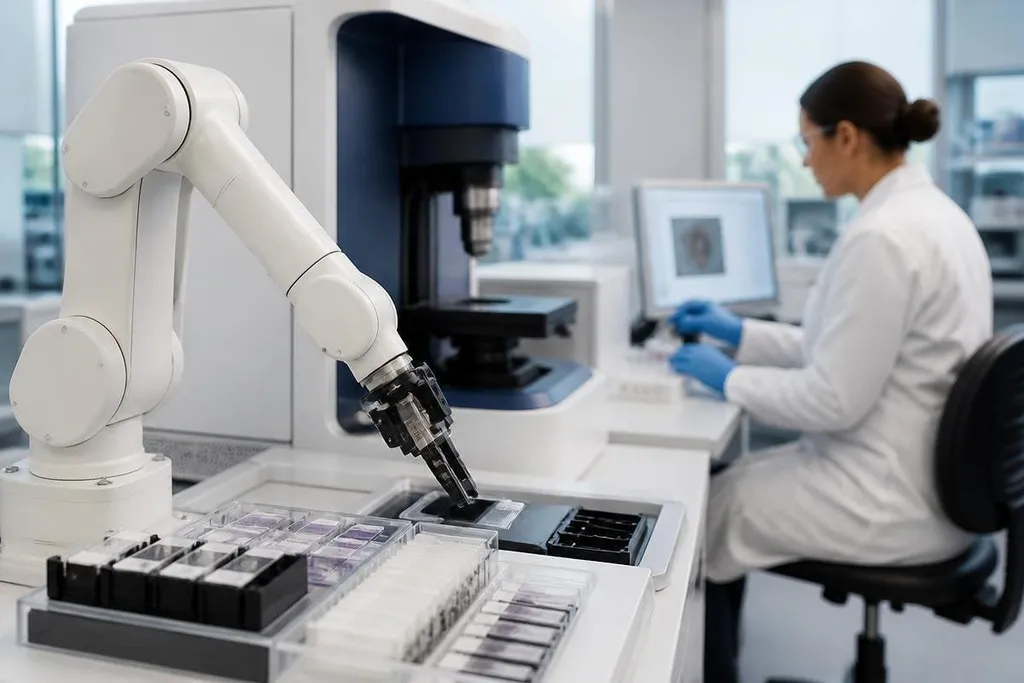
A diagnostic robot may spend its day moving a sample a few millimeters, placing a slide under a camera, or holding an imaging tool steady. Those small actions matter because medical testing depends on repeatable steps, careful timing, and clear records.
This shift affects lab managers, hospital teams, and anyone waiting for a result. Robots can take on controlled handling tasks while trained staff focus on cases that need judgment.
Quick read
- Sample handling is the first clear use
- Imaging robots can keep tool movement steady
- Human review still matters for uncertain results
Where robots fit first
Medical diagnostics includes several jobs that follow set steps. The system can sort labeled tubes, move samples between workstations, load a plate into an analyzer, or prepare material for imaging. These jobs are not the diagnosis itself, but they shape the test that follows.
The benefit comes from repeatable movement. A robot can follow the same path each time, pause for a set period, and record which container went where. That record gives staff a way to check the process when a result looks unusual.
Sample work also creates a clear boundary. The machine may carry out the physical steps, while a laboratory professional checks the sample, confirms the test method, and reviews the output. The exact split depends on the equipment, the lab, and the rules that govern the test.
Imaging and tissue analysis
Robotic systems can also help position cameras, scanners, probes, and other diagnostic tools. A steady arm may hold a sensor at a set angle or repeat a scan path across a defined area. That can help collect images that are easier to compare.
Image analysis adds another layer. Software can mark areas for review, sort images by visible features, or point a clinician toward a possible finding. The result is a review aid, not a replacement for medical judgment. A marked image still needs a qualified person who understands the patient and the test.
Pathology shows why this distinction matters. A robot may prepare slides and move them through a work cell, while image software studies the slide.
Tissue can vary widely, and a rare pattern may need a person to check the image against the sample and its clinical context.
Clinical claims need a record of the machine and the test. Robot24.com medical robotics reports can put those details beside the lab work before the next section begins.
What changes for a lab
The first change is the flow of work. Staff may spend less time carrying tubes or loading instruments, but they still need to set up the robot, check labels, respond to faults, and review records. A robot shifts work; it doesn't remove the need for trained staff.
The second change is data. A connected system can log a sample's path, the time spent at each station, and any stop caused by an error. That information can help a lab find delays, but only if its software connects cleanly with the lab's existing records.
The third change is access. A hospital may use a robotic system to run more tests during a fixed shift, while a smaller clinic may choose a limited device for one task. Price, floor space, service support, and local rules decide if the machine fits.
Limits that still matter
A robot works best when the sample, tool, and work area stay within known limits. Clotted samples, damaged labels, unusual containers, or a blocked path can stop the process. Staff need a clear way to inspect the problem and continue safely.
Medical testing also needs validation. Before a robot handles patient samples, the lab must check that its movements do not change the test result. That check can cover spills, temperature exposure, timing, labeling, and the handoff between machines.
The open question is not whether a robot can move a tube. It can. The harder question is how the full system performs when samples vary, instruments need service, and a clinician must act on the result.
I'd judge a diagnostic robot by that full chain, not by a smooth demonstration on a clean workbench.
A practical buying checklist
Use these questions before a lab approves a diagnostic robot:
- Name the exact task the robot will perform and the result that task must protect.
- Check how it handles unreadable labels, blocked paths, dropped samples, and power loss.
- Ask which records it creates and how staff can review them.
- Confirm the validation plan with the laboratory team and the equipment maker.
- Price installation, service, training, room changes, and software connections.
- Set a human handoff for every result that needs clinical review.
A useful system will make the test path easier to check, not harder to see. As more labs try robotic handling and imaging, the machines that earn a place will be the ones that show their work from sample arrival to verified result.